
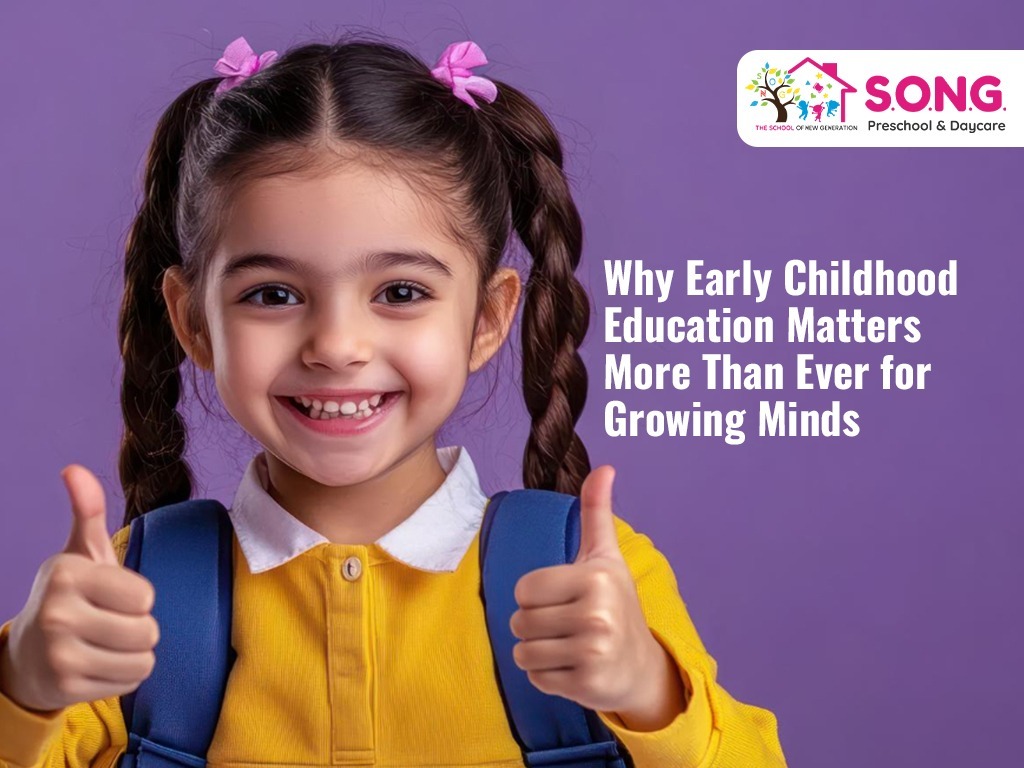
Why Early Childhood Education Matters More Than Ever for Growing Minds
Introduction:
Early childhood is one of the most important stages of human development. At Song Preschool & Daycare—The School of New Generation, the best preschool franchise in India, during the first few years of life, a child's brain develops at an incredible pace, forming the foundation for future learning, behavior, and health. Because of this rapid growth, early learning experiences play a crucial role in shaping how children think, communicate, and interact with the world around them.
About Us:
At SONG. Preschool & Daycare—The School of New Generation—early education is designed to nurture curiosity, creativity, and confidence in young learners. The preschool follows an integrated curriculum combining play-based and experiential learning to support cognitive, emotional, and social growth. Children engage in enriching activities such as storytelling, art and craft, music, dance, yoga, and sensory play.
The Critical Years of Brain Development
Research shows that nearly 90% of a child's brain development occurs before the age of five. During this stage, children absorb information from their surroundings through exploration, play, and interaction. Positive learning experiences during these early years help strengthen cognitive abilities such as memory, language, and problem-solving skills. Early childhood education ensures that children are exposed to stimulating experiences that support both intellectual and emotional development.
Building Social and Emotional Skills
Learning in early childhood is not limited to academic knowledge. One of the most valuable benefits of preschool education is the development of social and emotional skills. These experiences are important because emotional intelligence plays a major role in future academic success and personal relationships. Children who learn to communicate and collaborate effectively at an early age often develop stronger confidence and better adaptability in later school years.
Encouraging Curiosity and Love for Learning
Young children are naturally curious. They constantly ask questions, explore new objects, and experiment with ideas. A well-designed early learning program nurtures this curiosity by providing engaging activities that make learning enjoyable. This early love for learning often translates into greater motivation and enthusiasm for future educational challenges.
Strengthening Communication and Language Skills
Language development is another critical aspect of early childhood education. During preschool years, children rapidly expand their vocabulary and begin forming more complex sentences. Teachers play an important role in encouraging communication through activities like group discussions, storytelling, and interactive games. These experiences help children improve listening skills, pronunciation, and comprehension.
Developing Independence and Confidence
Preschool also helps children take their first steps toward independence. Simple tasks such as organizing belongings, following routines, and completing small activities encourage children to develop responsibility and self-confidence. As children successfully complete tasks and solve small challenges, they gain a sense of achievement. This confidence motivates them to explore new experiences and face challenges with a positive attitude.
The Importance of Play-Based Learning
Play is one of the most effective learning tools in early childhood education. Through play-based activities, children develop creativity, problem-solving abilities, and critical thinking skills.
For example:
- Building blocks help develop spatial awareness and motor skills
- Role-playing games encourage imagination and social interaction
- Puzzle-solving enhances logical thinking
These playful learning experiences allow children to explore concepts naturally while enjoying the learning process.
Preparing Children for Future Academic Success
Children who attend quality preschool programs often transition more smoothly into formal schooling. They become familiar with classroom routines, group activities, and basic academic concepts such as numbers, shapes, and letters. More importantly, they develop essential learning habits such as concentration, listening, and following instructions.
Partnering With Parents for Holistic Development
Early childhood education works best when schools and parents collaborate. Communication between educators and families helps ensure that children receive consistent guidance both at school and at home. Parents play a crucial role by encouraging reading, creativity, and exploration outside the classroom. When children see that learning is valued in their environment, they are more likely to remain curious and motivated.
Conclusion:
The early years are much more than preparation for primary school—they are the building blocks for a lifetime of learning and personal growth. A nurturing preschool environment encourages curiosity, creativity, and confidence while helping children develop the essential skills they need for future success.
FAQs:
- Q. 1 Why is early childhood education important for young children?
- Ans: Early education builds the foundation for cognitive, social, and emotional skills that influence a child's future learning and behavior.
- Q. 2 At what age should a child start preschool learning?
- Ans: Most children benefit from early learning programs between the ages of 2 and 4 when brain development is most rapid.
- Q. 3 How does preschool help improve a child's confidence?
- Ans: Interactive activities and guided play encourage children to communicate, express ideas, and build self-confidence.
- Q. 4 Can early education improve academic performance later in school?
- Ans: Yes, children who attend quality preschool programs often develop stronger language, problem-solving, and learning skills.
- Q. 5 What role does play have in early childhood learning?
- Ans: Play-based activities help children develop creativity, motor skills, and curiosity while making learning enjoyable.
- Q. 6 How can parents support early learning at home?
- Ans: Reading stories, encouraging creativity, and engaging in conversations can strengthen a child's learning experience outside the classroom.
 Explore